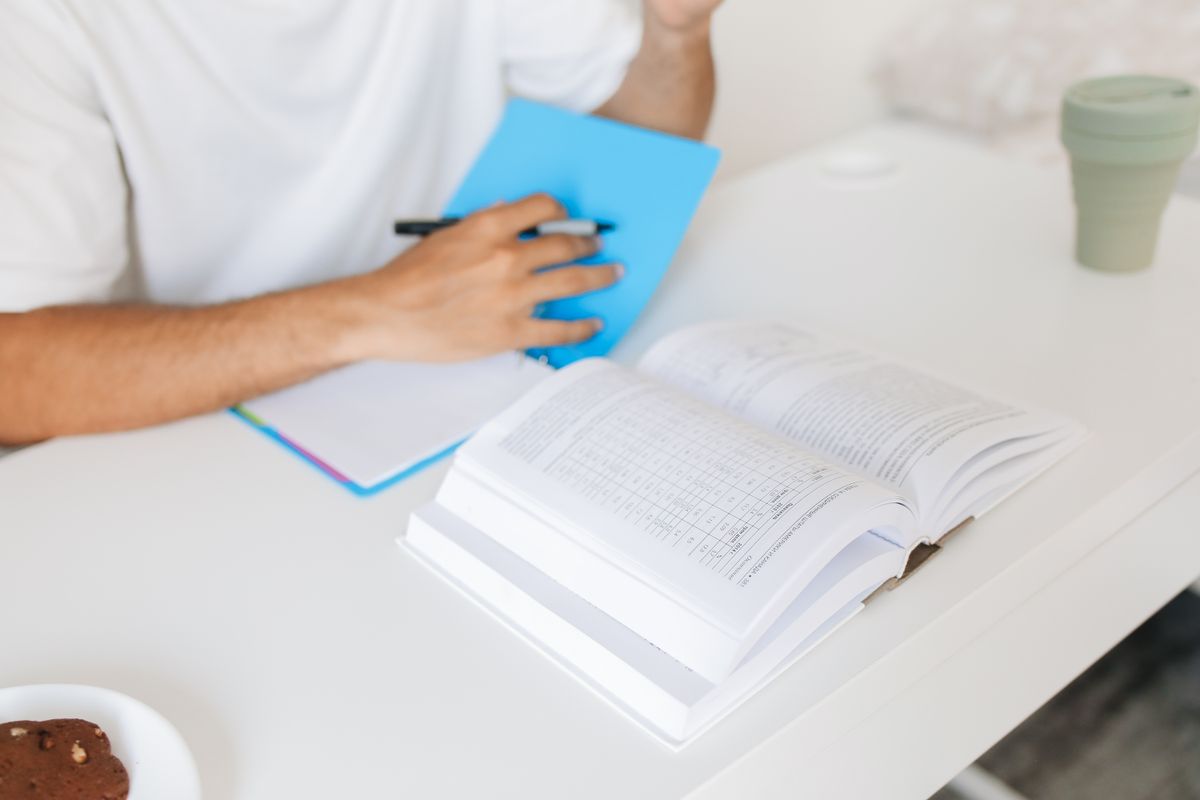
A ten-minute recall session for things worth remembering
Turn rereading into a small practice of bringing information back to mind.

Start with the everyday problem
Rereading can feel reassuring because familiar sentences become easy to recognise. That experience does not necessarily tell you what you could explain without the page. A short recall session gives you a more useful view. Use it for material you actually need, such as a course concept, a work procedure, or the main points of a book discussion.
A practical way to begin
Read a small passage, close it, and write what you remember in your own words. Open the passage again and mark omissions or errors in another colour. Create two questions that would require the important ideas. Return to those questions later in the week, before looking at the answers. Spend more time correcting misunderstandings than decorating the notebook or collecting endless cards.
Put it into an ordinary day
Consider finishing a short chapter for an evening class. A concrete starting point is to close the chapter and write three ideas from memory, because that identifies the next action rather than leaving the situation as an undefined concern. Once the first step is available, make room to check the ideas against the original text; check that the information, materials, or cooperation required for that step are actually present. Bring this particular attempt to a clear ending by choosing to schedule another attempt after a gap, so you can distinguish an action completed from an intention that still needs attention.
Keep the questions connected to the intended use. Someone learning a work procedure needs to recall the sequence and recognise exceptions, while someone preparing for a book discussion may need to explain the argument. Mix a direct factual question with one that asks why an idea matters. Mark uncertainty honestly instead of filling the gap with a guess that looks like an answer. When checking, write the correction beside the original attempt so you can see what changed. Save the questions that reveal a meaningful gap rather than endlessly adding easy ones.
The barrier to anticipate here is copying the author’s wording without understanding, which calls for a specific adjustment rather than a general promise to try harder. A practical response is to explain the concept using an example from your own work; make sure that adjustment fits the people, timing, and resources involved in this situation. Review the change through how many important ideas you retrieve before checking, keeping the observation close to the original problem so it helps you decide whether this method earns a place in your day.
Notice what makes a difference
At the next review, ask: what would count as an accurate explanation to someone new? An answer grounded in finishing a short chapter for an evening class will be more useful than judging your whole routine. If copying the author’s wording without understanding remains the difficulty, revise that part before increasing the complexity of the plan. Keep the next attempt focused on the same observable outcome: how many important ideas you retrieve before checking.
Keep the limits in view
A recall exercise needs accurate feedback. Practising a mistaken answer repeatedly can preserve the mistake. Choose a small amount of verified material and adjust the difficulty if every attempt is blank or every answer effortless.
The IES study guide recommends spacing learning and using questions to support recall and understanding.
Sources & further reading
Source links support the factual context. Practical examples and suggested workflows are original editorial guidance. Sources checked October 5, 2026.
Spotted something we should correct? Send a correction. Read our editorial policy.